Cold Front occur when warm air is forced upwards by cold air.
Warm Front occur when there is a lot of cold air sitting in one place and then a warm front comes in and it pushes the cold air away leaving warm air behind
Stationary Front is where a cold front and a warm front meet but neither one has enough force to push one away.
Occluded Front occurs when warm there is a little warm and and some cool air and the warm air gets forced upwards by the warm air
Which type of front occurred this week to bring the cold weather and then snow? a cold front
Friday, December 5, 2008

Tuesday, December 2, 2008

Thursday, November 20, 2008
Voyage Journey
Travel time: 13 Days
Direction traveling: Southwest
Were you successful? Yes
How many attempts? 2
How were you successful? I made it from San Fransisco to Sydney in a good amount of time.
What winds did you take advantage of or compete with during your travel? Trade Winds, Doldrums and Horse Latitudes.
Travel time: 9 days
Direction traveling: Southeast/ East
Were you successful? Yes
How many attempts? 1
How were you successful? I made it from Havana to London in 1 voyage
What winds did you take advantage of or compete with during your travel? Prevailing Westerlies.
Travel time: 15 days
Direction traveling: South/ Southeast
Were you successful? yes
How many attempts? 3
How were you successful?
I made the journey from Lima to Capetown
What winds did you take advantage of or compete with during your travel?
Direction traveling: Southwest
Were you successful? Yes
How many attempts? 2
How were you successful? I made it from San Fransisco to Sydney in a good amount of time.
What winds did you take advantage of or compete with during your travel? Trade Winds, Doldrums and Horse Latitudes.
Travel time: 9 days
Direction traveling: Southeast/ East
Were you successful? Yes
How many attempts? 1
How were you successful? I made it from Havana to London in 1 voyage
What winds did you take advantage of or compete with during your travel? Prevailing Westerlies.
Travel time: 15 days
Direction traveling: South/ Southeast
Were you successful? yes
How many attempts? 3
How were you successful?
I made the journey from Lima to Capetown
What winds did you take advantage of or compete with during your travel?
Sunday, November 16, 2008
Tuesday, November 4, 2008
Photochemical Smog

Photochemical smog occurs when pollutants of a city, sunlight, and hydrocarbons and nitrogen oxides mix together. When this happens it forms a brownish haze that develops in many sunny cities. Causes of photochemical smog are nitrogen and hydrocarbon oxides. There are many consequences of photochemical smog such as irritated eyes, harmed plants, animals, and living things, and photochemical smog can also damage many materials. As you can see photochemical smog is a problem we can hopefully get fixed some day.
Wednesday, October 29, 2008
Earth's Atmosphere
There are many ways that Earth is different from any planet or moon in space that has an atmosphere. To begin, Earth's atmosphere makes it suitable for any living object on Earth. The atmosphere provides water and very suitable temperatures for humans, animals, plants, and any other living thing. Also if there were any type of meteoroid or crater to enter the Earth's atmosphere it would burn up before hitting Earth. Unlike the moon or any other planet without an atmosphere it would just hit the planet, but because of the Earth's atmosphere it will most likely burn up before it hits Earth. Finally, with Earth having it atmosphere it causes weather. The weather is caused by water entering the atmosphere, but it is still weather that will make it suitable for things to live on Earth. These are just a few out of many reasons that the Earth is different from any other planet or moon without an atmosphere.
Monday, October 27, 2008
Sunday, October 5, 2008
Exploring Space Today
By: Grace Gatto
Working in Space
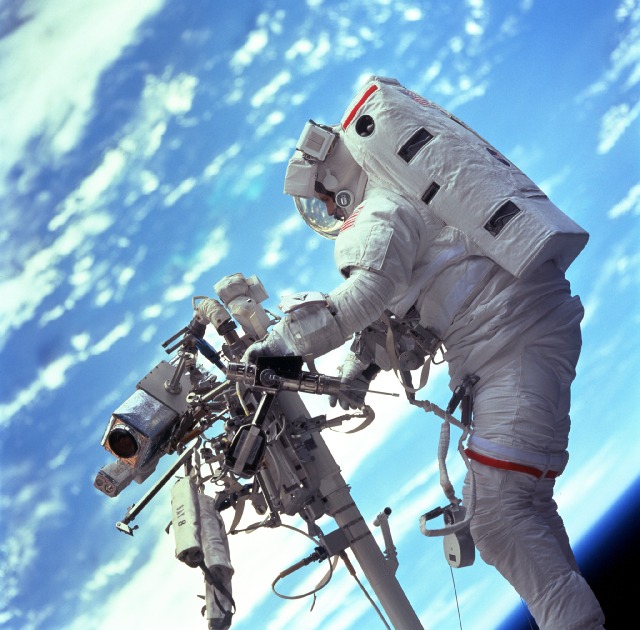
- A space shuttle is a spacecraft that can carry crew into space, return to Earth, and then be reused.
- Space shuttles perform many important tasks such as taking satellites into orbit, repairing damaged satellites, and carrying astronauts and equipment into space.
- A space station is a large artificial satellite on which people can live and work on for long periods of time.
- A space station provides a place for long-term observations that can be carried into space.
Space Probes
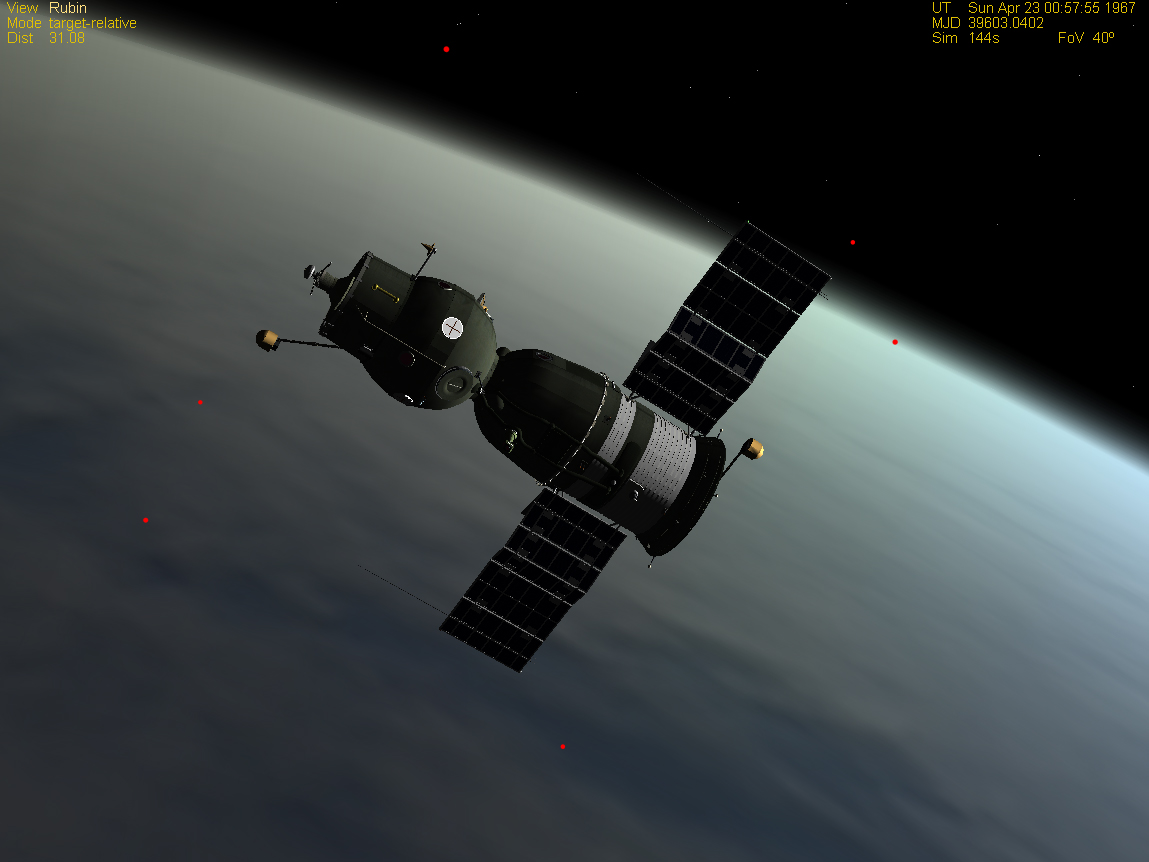
- A space probe is a spacecraft that carries scientific instruments that can collect data, but doesn't, however, carry any human crew.
- Common space probe features include electrical power systems, communication systems to send and receive messages, and scientific instruments to collect data and perform experiments.
- Space probes have no crew, which is an advantage because the probe can travel places space craft cannot go.
- The disadvantage of no crew is that it lacks human control intelligence on the probe.


Wednesday, October 1, 2008
Summaries
Science of Rockets
Since the late 1950's NASA has used Atlas rockets to launch probes into space. Recent Versions of the rockets are about 58 meters high. These Atlas rockets have 3 parts The first part of the rocket is called the Atlas, the second is called the Centaur, and the third part is called the payload. The payload launches the satellite or rocket into space.
The Space Program
NASA has some interesting history. Apollo 13 was launched April 11, 1970. Apollo 13 was a good thing turned bad. At first it seemed as if Apollo 13 was going to be a very smooth mission. After two days the oxygen tank blew up, but thankfully everyone on the flight survived. Even though NASA had this problem, they have still sent up 3 other spacecrafts.
Exploring Space Today
NASA started to use robots in space. They are floating robots that float next to an astronaut of their journey. This robot does many things that helps NASA with things in space. The floating robot floats next to the astronaut and monitors temperature, pressure, and air quality. This robot also allows the the astronauts to talk to one another and it's connected to a mission control center on Earth.
Using Space Science on Earth
Less than one percent of Earths budget goes to the NASA program. Even though that is not exactly all that much, people still complain about how money should go to something more useful, like medical hospitals.
Since the late 1950's NASA has used Atlas rockets to launch probes into space. Recent Versions of the rockets are about 58 meters high. These Atlas rockets have 3 parts The first part of the rocket is called the Atlas, the second is called the Centaur, and the third part is called the payload. The payload launches the satellite or rocket into space.
The Space Program
NASA has some interesting history. Apollo 13 was launched April 11, 1970. Apollo 13 was a good thing turned bad. At first it seemed as if Apollo 13 was going to be a very smooth mission. After two days the oxygen tank blew up, but thankfully everyone on the flight survived. Even though NASA had this problem, they have still sent up 3 other spacecrafts.
Exploring Space Today
NASA started to use robots in space. They are floating robots that float next to an astronaut of their journey. This robot does many things that helps NASA with things in space. The floating robot floats next to the astronaut and monitors temperature, pressure, and air quality. This robot also allows the the astronauts to talk to one another and it's connected to a mission control center on Earth.
Using Space Science on Earth
Less than one percent of Earths budget goes to the NASA program. Even though that is not exactly all that much, people still complain about how money should go to something more useful, like medical hospitals.
Monday, September 29, 2008
Wednesday, September 17, 2008
Perspective
Zoom is about seeing things in a whole different perspective. It starts out with what you thought could be one thing and then turns out to be completely different. For example, at first you might think that one picture looks like a sun, but when you look at it from a different perspective, it turns out to be a rooster.
Perspective can be described in many different ways. Almost everyone looks at things differently. We can look at pictures, people, or situations, but most of the time we have different perspectives. If you glance at a picture, you might think it looks like something different than what it really is. But if you look at it again, you might get a whole new perspective of the picture.
Scientists use perspective in many ways. They use perspective to look at one picture and then look at a different one to see the new perspective.
Perspective can be described in many different ways. Almost everyone looks at things differently. We can look at pictures, people, or situations, but most of the time we have different perspectives. If you glance at a picture, you might think it looks like something different than what it really is. But if you look at it again, you might get a whole new perspective of the picture.
Scientists use perspective in many ways. They use perspective to look at one picture and then look at a different one to see the new perspective.
Tuesday, September 16, 2008
Subscribe to:
Posts (Atom)